
The losses of Ukraine's agriculture due to the war amount to over $35 billion
This year, the sown area will be reduced by a quarter, and the application of fertilizers is two to three times lower than in the EU or the USA, while the use of plant protection products is also three times lower. These factors negatively affect crop yields.
The meat and dairy industry has suffered significantly, with a decrease in the population of cattle, poultry, pigs, and other livestock.
Over 5 million hectares of agricultural land have been mined, more than 5 million chickens and 250,000 pigs, over 100,000 cows, hundreds of logistic facilities, and over 2,000 units of agricultural machinery and vehicles have been destroyed.
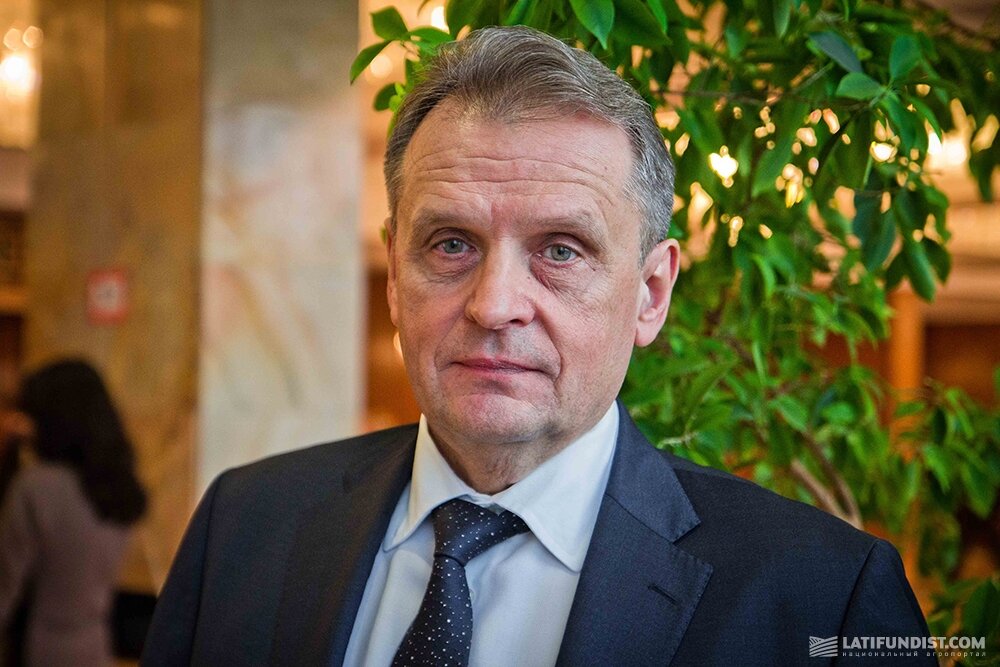
Despite all this, it is entirely realistic for Ukraine to double the grain and oilseed yields to 150 million tons within the next 10 years. We discussed how to achieve this ambitious goal with Leonid Kozachenko, the President of the Agrarian Confederation of Ukraine. He was a speaker at an online seminar on food security organized as part of the project by the Organization for Economic Cooperation and Development (OECD) and the International Labour Organization (ILO) called "Business Resilience During Wartime."
-
What is the current situation in the agro-industrial complex (APK) and Ukraine's role in the international agricultural market?
We actually produce a lot of agricultural products, but we only consume 80% of them. That's why Ukraine is an export-oriented country in the agricultural sector and is an important player on the international stage. How is this achieved? Firstly, we have 25% of the world's black soil reserves. Secondly, historically, Ukrainians have been engaged in agriculture for centuries, so they have the experience and knowledge. Once, when I spoke in Canada before farmers, they asked me to speak in Ukrainian because most of the audience were of Ukrainian origin.
All this has allowed us to achieve good results. We are a leader in sunflower oil supply (with an average annual volume of 5.6 million tons worth about $6 billion), and we rank 2nd or 3rd among grain exporters (with an average annual volume of 60 million tons worth about $22 billion). We are among the top 10 producers and exporters of grains and oilseeds and in the top 30 producers and exporters of raw animal products.
However, in terms of food exports (raw materials and processed products worth an average of $24.2 billion over the past 5 years), Ukraine ranks only 25th in the world, despite having 33.4 million hectares of arable land. In contrast, the Netherlands, with land area 4.5 times smaller (only 7.57 million hectares), has food exports worth $108.4 billion and ranks 2nd in the world in this regard.
The reasons for this, besides the war and the scale of destruction, are insufficient application of fertilizers and plant protection products, chronic lack of funds for farmers and meat and milk producers, and insufficient knowledge about processing opportunities.
-
What needs to be done to maximize our potential?
As I mentioned, we crossed the mark of producing 100 million tons of grain in 2021. But about 10 years ago, we had a discussion with scientists about our true potential, comparing our crop yields to those in the USA, Europe, and elsewhere. We lagged behind in this indicator. Recently, the world has made progress in genetic improvement of crops such as wheat, corn, oilseeds, and so on. We should move in this direction as well. By realizing 90% of the genetic potential of grains and oilseeds (increasing sown areas to 35 million hectares, following crop rotation requirements, minimizing harvest losses using modern technology), we can achieve grain and oilseed yields of about 150 million tons. It is also possible to increase milk production to 25 million tons and meat production to 8 million tons annually.
Why hasn't this been done before? We lacked funds to apply a sufficient amount of mineral fertilizers compared to the European Union. We also had a shortage of modern machinery. However, in some areas such as digitalization of processes, we are leading. Therefore, if we find financial resources for development, we can reach the targets mentioned above. To achieve these goals, it is necessary to attract $80 billion for investment in the agro-industrial sector. The key is to provide producers with access to medium-term (5-10 years) loans, which will allow for deeper processing.
- How does war limit these initiatives?
The war restricts these initiatives primarily due to the scale of destruction inflicted. In the agricultural sector alone, the estimated losses amount to $35 billion. Hundreds of thousands of cows, pigs, poultry, and other livestock have been destroyed. Additionally, 25% of agricultural land is currently unusable for cultivation due to landmines, contamination, or the need for reclamation. Over 5 million hectares of land have been mined. Moreover, the Russian aggression continues. Therefore, the most crucial priority is to achieve victory and restore what we had before the war. However, concurrently, we need to develop a strategy for the next 10 years and determine what needs to be done in the agricultural sector.
- What is your vision?
In my view, the most significant problem lies in the fact that we have primarily been exporting raw materials without processing them. Yet, the future of agriculture lies in processing. For instance, corn alone can yield up to 30 different products. This aspect of the industry is largely undeveloped in Ukraine. While we are leading in terms of raw material exports on the international market, we rank 25th in processed products, whereas we should be among the top 2-3. Comparing ourselves to the Netherlands, which has four times less agricultural land than Ukraine, they generate three times more profit.
Therefore, the most important task is to triple the production of processed agricultural products over the next 10 years.
Some investments in processing can be recouped within six months, while others may take a maximum of 5-10 years. The key challenge lies in the lack of financial resources. We need to strengthen credit facilities, establish investment funds, and start by compensating the agricultural sector for the losses incurred during the war. We should provide free access to medium and long-term investment resources, demine agricultural land and areas occupied by maritime and land logistics facilities, and develop and approve a clear strategy for the agricultural sector's development along with a specific and transparent implementation program for the next 10 years. It is crucial to establish an unchanging vertical structure for state governance, fiscal and monetary policies, and regulations and control practices in correlation with the practices implemented by the European Union.
-
You mentioned the need for at least $80 billion in investments. Which specific sectors or technologies require the most investment, and where is the situation relatively better?
In crop production, we should allocate up to $8 billion, which will enable us to achieve a gross harvest of 150 million tons, as I mentioned earlier. For horticulture, we need around $2.5 billion. Irrigation and sprinkler systems are essential considerations. While we are not suffering as much from water shortages as many other countries, global warming is influencing this factor, and we must take it into account. I propose allocating around $7 billion to this sector. In greenhouse farming, we should invest approximately $3 billion and significantly increase its capacity. For animal husbandry, we need to attract around $18 billion to substantially increase milk and meat production. For example, we can increase milk production from 10 million to 15 million tons per year and meat production from 7 million to 10 million tons.
-
Regarding processing, where do you recommend focusing our efforts?
Even if I were to concentrate on a single crop like corn, I wouldn't have enough time in a day to discuss all the available processing technologies. There are over 30 different products that can be derived from corn, such as ethanol, oil, starch, sugar syrups, feed components, cereals, flour, lysine, and biogas. For instance, lecithin (lipids) is currently in high demand for vaccine production, especially for vaccines against the coronavirus. The global shortage of lecithin is so significant that the return on investment would occur within 1.5 months, despite the initial investment being substantial.
-
Does Ukraine have some notable achievements and developments here?
Yes, we have developed a software called PRCM that allows for the management of production processes. It takes into account price quotations for various processed products, allowing you to adjust the production of specific products and their volumes accordingly. For example, if the cost of bioethanol is increasing, you may choose to invest 20% more in its production, while reducing the production of starch (hypothetically) if its price is declining.
The future lies not only in processing, but also in intelligent technologies for production management.
For more detailed insights from other speakers at the seminar on mechanisms to enhance Ukraine's food security, you can visit the project's website at http://ooruprojects.com.ua/.
Spoken by Irina Kutsiuk, Head of the Press Service of the Ukrainian League of Industrialists and Entrepreneurs, and Director of the Information Department of the project.